
Here you will learn how long the flu virus can remain on common surfaces and what environmental factors impact its resilience.
Table of Contents
Flu season affects businesses, schools, and shared spaces every year. The virus does not just spread through the air – it also lives on surfaces that people touch throughout the day. Knowing where the flu lingers and for how long helps focus cleaning efforts where they matter most and take the right steps to protect your space.
Keep reading to learn how the flu transmits from person to person, what types of surfaces and facility conditions are most hospitable for the flu, and simple steps you can take to reduce its impact in shared spaces.
How Does the Flu Virus Spread?
There are two primary ways for a person to contract the flu. The first is through direct contact – when an infected person coughs or sneezes and someone nearby breathes in those droplets. The second is by indirect contact, which is when someone touches a surface that carries the virus and then touches their face.
What Affects How Long Flu Viruses Last on Surfaces?
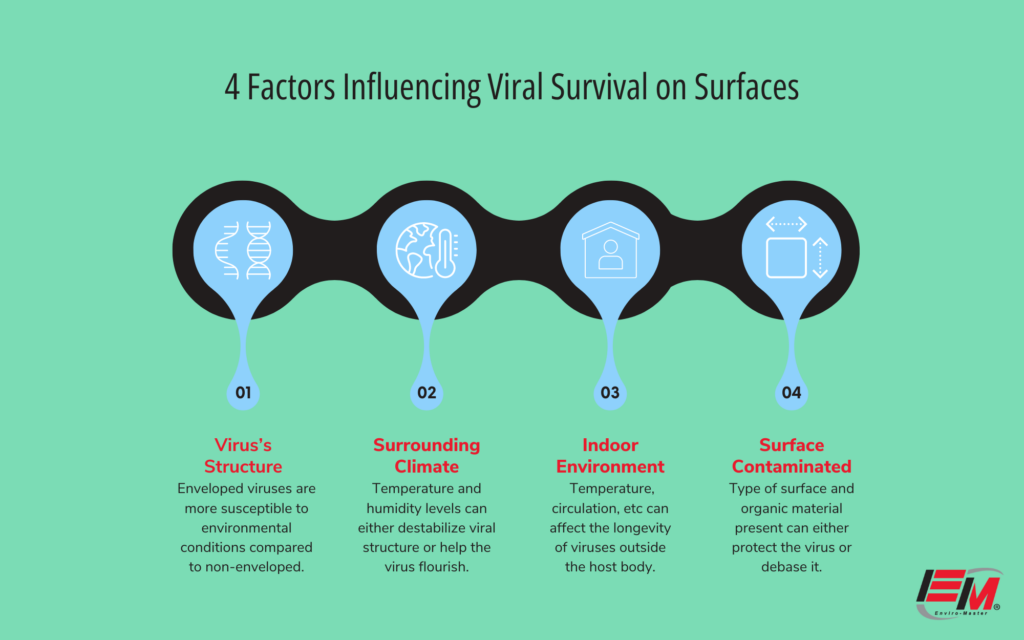
Several factors affect how long the flu virus survives on surfaces:
- Temperature and humidity: Heat, moisture, and sunlight change how long flu viruses live on the surfaces you touch every day. These viruses last longer in cool, damp spaces and fade faster in warm, dry air.
- Indoor air quality: Poor ventilation and air circulation allow virus-carrying particles to linger in the air longer. Well-ventilated spaces with fresh air exchange dilute and remove those particles more quickly.
- Surface type: Hard surfaces like steel and plastic let viruses stay active longer than porous materials like fabric or paper.
Knowing which areas in your facility are most susceptible to the flu helps you focus on cleaning efforts and potential indoor air quality improvements.
How Long Do Flu Viruses Live on Surfaces?
Studies show that influenza A viruses survive up to 48 hours on hard, non-porous surfaces like plastic, steel, and glass. On porous surfaces like cloth or paper, the virus breaks down much faster and poses less of a transmission risk.
It is also important to understand the difference between a virus being present on a surface and being able to cause infection. Viral traces are generally detectable on surfaces for longer than the virus remains infectious. Since the virus weakens over time as its structure breaks down, targeting high-touch, hard surfaces with consistent cleaning and disinfection makes the biggest difference.
How Do You Reduce Flu Virus Transmission in Shared Spaces?
Learn to promote healthier spaces with a few consistent habits that will also protect your team and reputation:
Frequent Handwashing
Washing hands with soap and water for at least 20 seconds is a great infection prevention tool. When soap and water are not available, use a hand sanitizer with at least 60% alcohol. This single habit reduces the risk of transferring the virus from surfaces to your body.
Your team touches thousands of surfaces every day. Implementing a thorough hand-hygiene program throughout your facility supports a healthier, cleaner image. Keeping soap and paper towel dispensers well stocked in addition to hand sanitizer stations also supports this effort.
Regular Cleaning and Disinfection of High-Touch Surfaces
In offices, schools, and other shared spaces, regular surface cleaning cuts down transmission significantly. Disinfect doorknobs, light switches, desktops and countertops, and shared equipment on a consistent schedule. Regular cleaning that covers high-traffic, high-touchpoint areas like restrooms, stairwell banisters, and kitchens helps keep your space clean and ready for everyone who walks through the door.
For commercial spaces, professional-grade cleaning products deliver stronger, more consistent results than standard off-the-shelf options. Use U.S. EPA-registered disinfectants that are safe for consumers and the environment. Be sure to follow product instructions for full effectiveness.
Annual Flu Vaccinations
Annual flu vaccination is recommended for everyone six months and older. Vaccination lowers the risk of getting the flu, reduces the severity of illness, and decreases the chance of hospitalization. Bringing in health care providers to offer flu shots to employees is one way to promote infection control efforts.
Practice Respiratory Hygiene
Cover coughs and sneezes with a tissue or your elbow, then wash your hands right away. Avoid touching your face with unwashed hands. These habits stop the virus from moving from surfaces into your body. Encourage others to do the same by making tissues, soap and water, and hand sanitizing stations available.
Keep Shared Spaces Clean Year-Round
Clean spaces stop the spread of flu – even when it is not flu season. Continue to disinfect high-touch surfaces, wash towels and linens in hot water, and keep indoor air balanced year-round. Strong cleaning habits protect your workplace and lower the risk of illness spreading through your team.
Enviro-Master Sets the Gold Standard for Professional Cleaning
Now that you know how long the flu virus survives on hard surfaces and what affects its lifespan, you can focus your cleaning efforts where they count. Consistent attention to high-touch areas is the most effective step you can take.
That is where Enviro-Master leads the way. We do more than wipe down surfaces. We deliver clean done right, with trained experts who show up on time and never cut corners. Backed by national strength and local care, we help your space look, smell, and feel truly clean every single day.
