
Commercial restroom sinks are one of the first things people notice in a restroom. Customers and employees stand right in front of them. They touch the faucets and see the basin, counter, drain, and nearby surfaces up close. Because everything is right there, soap residue, water spots, stains, and other buildup can be hard to miss. Even small marks can make the whole sink area look less clean.
Even with regular cleaning, grime can slowly build up around the sink. Faucet bases, drains, seams, and other tight areas are especially easy to miss. Hard water can also leave cloudy spots and mineral deposits behind. In a busy restroom, sinks get used over and over throughout the day. That heavy use can make clean, polished surfaces start looking dull or dirty much faster.
Taking care of these problems early can make regular cleaning easier. It can also help the whole restroom look cleaner and better cared for. You don’t always need to change your entire cleaning routine. Sometimes, you just need to know where to look and what needs more attention. Follow these five steps when sink grime starts affecting how your commercial restroom looks.
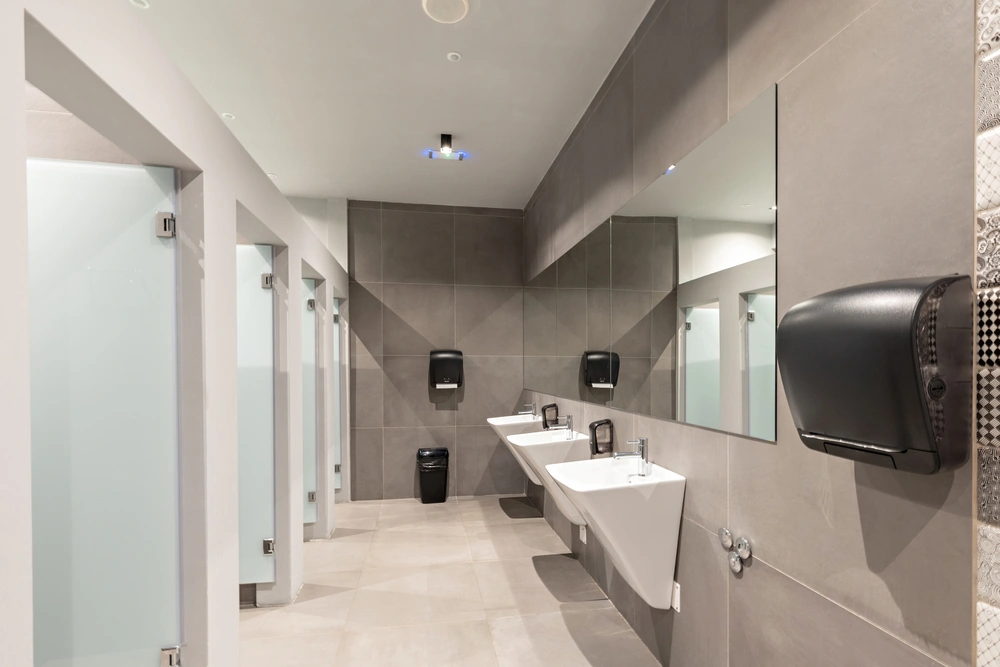
Step 1: Identify the Type and Location of Sink Grime
Before you clean the sink again, look closely at what you’re dealing with. “Sink grime” can mean several different types of visible buildup. Knowing what you see and where it collects can help you choose the right cleaning approach. Take a minute to check the whole sink area instead of focusing only on the spots that look dirty at first.
- Soap residue
- Water spots
- Mineral deposits
- Rust-colored stains
- Discoloration
- Residue around drains
- Buildup around faucet bases and seams
Don’t stop at the middle of the sink basin. Look closely at the faucet handles, faucet base, drain opening, backsplash, counter edges, and the seams where the sink meets the counter. These smaller spaces are easy to miss during a normal cleaning. You may also want to check underneath exposed fixtures. Grime can collect there even when the more visible parts of the sink look clean.
If your facility has several restroom sinks, take a look at all of them. You may notice the same type of buildup on several fixtures. That can help you spot a larger issue. Hard water may be leaving deposits behind, for example. Heavy restroom use could also be playing a part. You may even find certain areas that your regular cleaning routine tends to miss.
Notice how quickly the grime comes back, too. Water spots that show up during a busy day may simply mean the sink needs more frequent attention. Stains or deposits that return soon after a full cleaning may be different. Those problems could call for a deeper cleaning method or closer attention to what’s causing the buildup in the first place.
A good inspection helps you understand what you’re actually cleaning. Some grime is simply everyday residue that regular cleaning can handle. Other buildup may have been collecting for a longer time and need extra attention. Once you know what you’re seeing and where it tends to collect, it’s much easier to decide what your next cleaning step should be.
Step 2: Remove Surface Buildup During Routine Restroom Cleaning
Regular cleaning is your first defense against visible sink grime. Fresh soap residue, splashes, water spots, and loose buildup are usually easier to clean before they collect over time. Keeping up with these small messes can also make deeper cleaning easier later. The goal is to give the whole sink area regular attention, including the places people may not notice during a quick wipe.
Clean the entire sink instead of wiping only the spots that look dirty. Spend a little extra time around the faucet base, handles, drain opening, backsplash, seams, and counter edges. These areas can collect soap, water, and other residue throughout the day. Meanwhile, the middle of the basin may still look fairly clean. A quick glance at the sink can easily miss that hidden buildup.
Choose cleaning products and methods that are right for your sink and fixture materials. Different finishes and surfaces may need different care. Following the manufacturer’s recommendations can help you clean away visible buildup without damaging the sink or its finish. You don’t need to scrub harder than necessary. The right product and method can often make the job easier while helping protect the fixture.
After cleaning, dry or polish the surfaces when it makes sense for the material. This can help remove streaks and water spots that might otherwise make a clean sink look unfinished. It also gives you a better view of any stains or deposits that are still there. Once the surface is dry, you can more easily tell whether regular cleaning was enough or deeper cleaning is needed.
Next, take a look at the sink the way a restroom user would see it.
Stand where a customer or employee normally stands. Look at the faucet, basin, counter, mirror, and nearby surfaces together. The basin might be clean while the faucet is still covered with water spots. You might also notice residue around the drain or along the counter. Looking at the whole area this way can help you catch small problems that are easy to overlook while cleaning.
This final check only takes a moment, but it can be useful. Your staff gets a chance to see the restroom from the same view as the people using it. Small details often stand out more from that angle. Catching leftover spots, residue, or buildup before customers and employees notice them can help the whole sink area look cleaner and more cared for.
Step 3: Deep Clean Grime That Routine Wiping Leaves Behind
Some grime won’t come off during a normal wipe-down. Start with the places that are easiest to miss. Check around faucet bases, drain openings, seams, sink edges, backsplash joints, and other tight spaces. Depending on the sink and fixture design, buildup may also collect underneath faucet parts or around hardware. These small areas can hold residue long after the main basin has been cleaned.
Use products and tools that are right for both the surface and the buildup you’re trying to remove. Be careful with rough scrubbing tools or strong products that could scratch, dull, or damage the fixture. You’re trying to improve the sink’s appearance, not wear down its finish. A deeper cleaning should focus on the grime that your normal daily routine hasn’t been able to remove.
This matters even more in busy commercial restrooms. When people see the same sink every day, slow changes can be easy to miss. A faucet may gradually lose its polished look. Mineral deposits can slowly become more visible around the drain. White residue may collect along seams or fixture bases. Regular deep cleaning can address these areas before the entire sink starts looking worn or poorly maintained.
Professional Commercial Cleaning Services can also support your regular facility maintenance when everyday cleaning isn’t giving you the appearance you want. Your staff can continue handling routine cleaning while professional service focuses on buildup and areas that need more attention. Services such as commercial power washing and commercial window cleaning can help with other parts of your facility as needed.
Step 4: Address Recurring Stains, Drain Odors, and Hard-Water Buildup
When a sink starts looking dirty again soon after cleaning, take some time to figure out why. Repeating the same cleaning process may not solve a problem that keeps coming back. Look at where the buildup appears, what it looks like, and how quickly it returns. Those details can help you tell whether you’re dealing with hard water, soap residue, a drain issue, or another facility problem.
Hard water is a common cause of recurring sink buildup. When water dries, minerals can stay behind on faucets, basins, drains, and nearby surfaces. Over time, those minerals can become easier to see. You may notice cloudy spots, rings, discoloration, or crusty residue. Regular cleaning can help, but areas with frequent water contact may need closer attention to keep those deposits under control.
Soap can leave another type of buildup behind. Every time someone washes their hands, splashing can carry soap and water into seams and around faucet bases. It can also collect along the backsplash and nearby counter areas. When those smaller spaces get missed during routine cleaning, residue can slowly build up. Checking them regularly can help you catch the problem before it becomes much more noticeable.
Odors need a different kind of attention.
When an unpleasant smell seems to come from the sink, wiping the basin may not solve it. A scented cleaning product might cover the smell for a short time without dealing with its source. Pay attention to where the odor seems strongest. Check whether it’s coming from the drain and whether it returns soon after the restroom has been cleaned. That can help you narrow down the problem.
Slow drainage and odors that keep returning can be signs that the drain needs more attention. Surface cleaning only reaches what you can see around the sink. Enviro-Master’s drain treatment services can provide another level of care for commercial drain lines when cleaning the visible surface isn’t enough. Taking care of the drain itself may also help you manage problems that regular sink cleaning can’t reach.
Take a look for other facility problems that may be making the sink harder to keep clean. A leaking faucet can leave new water spots and mineral deposits over and over. Damaged caulk may hold visible residue in small gaps. Corroded fixtures can also continue looking worn even after a thorough cleaning. These issues may need more than another round of cleaning.
When leaks, plumbing problems, corrosion, or damaged materials are involved, cleaning may need to be paired with a repair or replacement. Fixing the source of the problem can make ongoing maintenance easier. It can also keep your staff from spending time cleaning the same marks or buildup again and again without getting the improvement they’re looking for.
Step 5: Schedule Professional Restroom Deep Cleaning When Buildup Keeps Returning
Daily restroom cleaning takes care of the immediate needs of a busy facility. It removes fresh residue, cleans visible surfaces, and helps the room stay presentable throughout the day. Deeper cleaning has a different job. It gives you a way to address stains, deposits, odors, and buildup that regular cleaning may leave behind after weeks or months of restroom use.
Professional restroom cleaning and hygiene services can give extra attention to areas where buildup has become harder to manage. That may include sinks and faucets along with counters, drains, floors, grout, and other restroom surfaces. This extra attention can be especially helpful in areas customers see from only a few inches away while washing their hands or using the restroom.
A cleaner-looking sink and polished fixtures can improve how the whole restroom looks. Cleaner counter edges and fewer visible mineral deposits can make a difference, too. Drain care may also help when unpleasant odors are part of the problem. These details matter because people see and touch restroom fixtures up close, making stains, spots, residue, and buildup much easier to notice.
Don’t look at the sink by itself, either. When grime has built up around your sinks, it’s worth checking the rest of the restroom at the same time. Look at the grout, floor edges, areas around fixtures, and other spots that may get missed. A freshly cleaned sink won’t improve the whole room as much when nearby floors or fixtures still have visible buildup.
Services such as Tile & Grout Deep Cleaning can help address buildup on restroom floors that normal mopping may leave behind. Grout lines and other textured surfaces can hold dirt that’s harder to remove during routine cleaning. Giving these areas deeper attention can help them look cleaner and better maintained alongside the sinks and other restroom fixtures.
Professional deep cleaning can work alongside the routine maintenance your staff already handles. Your team can keep taking care of everyday cleaning and fresh messes. Deeper service can focus on buildup and areas that need more time or attention. This approach can help you maintain a restroom that looks cleaner and better cared for, while giving customers and employees a better impression of the space.
Keep Restroom Sink Grime From Coming Back
Once your sinks are looking clean again, regular checks can help keep them that way. Make sink areas part of your normal restroom walkthroughs. Don’t look only at the center of the basin. Check faucet bases, handles, drains, seams, backsplash areas, counter edges, and nearby surfaces. These are common places for water spots, soap residue, and other buildup to start collecting again.
Your cleaning schedule should also match how much the restroom gets used. A lightly used employee restroom may need less attention than a customer restroom used by hundreds of people each day. Watch what happens between scheduled cleanings. When water spots or visible residue keep returning before the next cleaning, that sink area may simply need to be checked and cleaned more often.
Keep an eye on changes over time as well. Hard-water deposits, slow drains, odors that keep coming back, damaged caulk, leaks, and corrosion can all make sinks harder to maintain. Taking care of these problems early can keep them from becoming more noticeable. Periodic deep cleaning can then focus on the stubborn buildup your regular cleaning routine isn’t able to fully remove.
Enviro-Master’s Restroom & Hygiene Service provides professional cleaning support for commercial restrooms and other high-visibility areas of your facility. Regular maintenance can handle everyday needs, while deeper cleaning can address tougher buildup when needed. Together, these services can help your restroom maintain a cleaner, brighter appearance that reflects well on your business.
When customers and employees walk into your restroom, you want them to see a space that looks cared for. Keeping sinks free of visible grime is one small part of that job, but it’s a detail people can easily notice. With regular checks, routine cleaning, and deeper attention when needed, you can help your sinks and the rest of the restroom stay looking their best.
